

Powerful Skills That Make Your Journey as an Online Course Creator Thriving
If you just made your first step in your journey as an online course creator while sharing your expertise with the world, I’ve got to say, Congratulations! You’re embarking on a thrilling journey, just like some friends of mine at curso online marketing digital. However, creating an engaging and successful online course isn’t as simple as just recording some videos and uploading them.
To thrive in this competitive market, there are essential skills every online course creator must have. From content creation to marketing strategies and communication skills, we’ve got you covered. In today’s post, we’ll highlight the powerful skills that can make your journey as an online course creator thrive.
Content Creation
 Content creation is the very foundation that defines and sets the success of any online course. Of course, the key is to strike a balance between engaging, informative, and relevant content. But how do you create such content, plus it can stand out in a sea of courses? Start by researching what your target audience wants to learn and the problems they are facing. Also, break up your content into bite-sized chunks easy for learners to digest. Use visuals such as images and videos to support your text-based lessons. Always aim for excellence in every aspect of content creation – from writing quality scripts or recording high-quality video lectures – so that you provide value to students consistently throughout their learning journey.
Online Marketing
Simply creating a great course won’t do much good if people don’t know about it. Mastering how you can brand and market your online course is a must. Here are some key aspects to consider when developing your online marketing strategy. Social media can be an ace sword that can slay in reaching potential students. Using platforms like Twitter, LinkedIn, and Facebook, you can connect with individuals who may be interested in what you have to offer. Engage with them by sharing valuable insights or starting conversations around relevant topics.
Communication Skills
As an online course creator, communication skills are paramount to ensure that your students understand the content being taught. The ability to convey ideas and concepts effectively can make or break a student’s learning experience. These include active listening skills, writing and speaking clarity, and empathy skills. By honing these skills, instructors increase engagement levels among participants by ensuring clear comprehension of topics covered during classes, ultimately leading to success in achieving educational goals set out at the start of any course created online.
Research Skills
 Okay, those three are indeed paramount. But why should we hone our research skills as well? Having strong research skills is a critical component for developing quality content. Research skills not only involve gathering information but also analyzing and interpreting data to create meaningful content that resonates with your audience. You can do this by finding credible sources that you can use effectively in your courses. Aside from that, honing in on relevant keywords and topics related to your niche is always a good step to take. Furthermore, effective note-taking techniques play a vital role in organizing your research findings into digestible pieces of information that can be incorporated into your online course lessons seamlessly.
Becoming a successful online course creator takes time, effort, and dedication. However, with the right skills in content creation, online marketing, communication, and research, you can take your journey to new heights. Creating high-quality content which can resonate with your audience is the golden key to building a thriving business.…

 Numerology can also help you to discover your hidden talents. These are the talents that you have but may not be aware of. Numerology can help you to uncover these talents and use them to make a difference in the world. So if you are wondering what your true talents are, numerology may be the answer. According to a research, many people have said that they think they do not have any talents until numerology shows them their hidden talents.
 The article includes two topics: a “problem” topic and a “discussion” topic. The new GRE content is much the same as the current GRE material; the main difference is that some concepts are emphasized. There will be much less focus on perimeter concepts (no more analogies/antonyms) and even more emphasis on “senile cognitive reasoning” concerning essential reading. In the qualitative thinking section, there is more emphasis on interpreting real-life data and scenarios. The writing section of the new GRE, on the other hand, consists of a “Question” topic and a “Discussion” topic. The best plan of action is to learn as much as you can about the subject, so you know what to expect.
 The Qualitative Reasoning section includes two types of questions: Multiple Choice and Qualitative Comparison. Meanwhile, the “Question” topic in the Writing section gives you two runs to choose from; the “Discussion” topic has only one minute. In addition to the sentence completion questions, there is a new type of problem called sentence equivalence, in which you must recognize that both answer choices give the sentence the same meaning. For reading comprehension questions, there may be two new types of problems. Along with the traditional multiple-choice questions, there will be multiple-choice questions and sentence stress questions.
  The current GRE is a computer-adapted test (CAT). The CAT test is very different from the traditional pen and paper test that many people are used to. Each time you answer a question, you are done with that particular question. The computer selects another question based on specific criteria, such as the correctness of your answer, the question’s difficulty, and the problem’s nature. Calculators are not allowed. Each item is only one minute into the writing portion of the new GRE. The maximum possible score for the current GRE is 1600, and scores are awarded in increments of ten. Scores are available immediately after testing.



 Ideal for children from 2 to 4 years old. Blocks are the most basic brain game for children since the beginning of time and have remained a continuity in the “toy sphere” – and there is a very good reason. Just expose your child to cubes of different colors and sizes, and that’s it! Let your child explore the cubes and let his imagination run wild. All components of your child’s progress are vulnerable, including shape and color recognition, creativity, spatial awareness, and more. We recommend starting with the basic color and shape blocks for younger children and moving on to Legos or abstract blocks for older children.
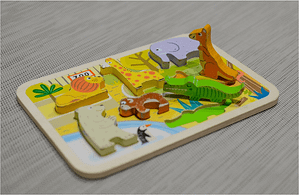 Suited for 2-8 years old. Puzzles can be fun for the
 The first thing to do is to choose the perfect words. To be able to choose the words, throw a shot you would like to have around with many different ideas. For example, the Thanksgiving word searches would have several obvious words, such as November or Turkey. However, you have to look for more side choices through thesaurus dictionary or online article regarding this topic, which are not that literal and obvious.
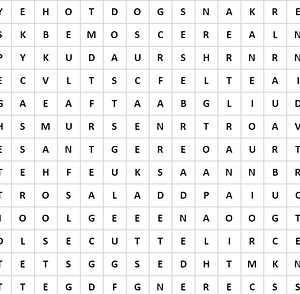 When making a word searches game, avoid using a word with rare letters, such as X, Z, or J, to increase the game’s difficulty. Just use common letters, such as P, R, S, T, and all the vowels to make it difficult for the eyes to identify the concepts and find the words. Then, apply the trick that works better in word searches game by using multiple and backward directions from the listed words you have prepared. Mark all the board and make words in backward, vertical, and diagonal for difficult levels instead of only a flat direction. The most difficult way to solve the puzzle on word searches is to find a word on the diagonal direction but read in reverse.
 Many people love it today; some people despise it today, but the more you look at it, the more words you submit to it. This is essential to improve his eloquence. Reading does not have to be boring. You can read the pages yourself or read them in articles, magazines, books, or newspapers.


 Interest will not be triggered by mixing different math topics. Focusing on one item helps you understand theories, as explained in various cases, which gets you ready. When you do Math alongside your peers, you discuss their perspectives and thoughts and receive fresh insights. You can get more than one method to use when tackling a question.
 You can ask for the school’s information package that you chose to have detailed knowledge and the critical specifications for becoming a dental hygienist. Evaluate the admission requirements for your chosen academy. Some schools may have additional requirements that you might want to check out. This way, you can assess your strength and weaknesses, and you will have time to improve them beforehand! If you are determined to become a dental hygienist, do all these requirements and submit your papers to the university.
 Get Some Additional Training
 An audiobook is taking a typical conventional publication and vocally analyzing the recording of the narration. A book is listed with a single narrator covering everyone the characters within the text.
 Is it law or is it medicine? Is it science or is it humanity? Your career or the undergraduate degree may dictate this choice greatly. Making the right decision will help you to move to the other steps without many problems. Some people may, however, be in a dilemma on which program to take in their masters level but a career counselor or mentor can assist.
 Resources are paramount especially if you are pursuing the academic category. Research needs various resources for it to go through and most reputable graduate schools know that. The lecturers who are part of the resources also matter a lot. Various pre-visits to the institutions will help you to make a decision on that.
 As mentioned on our introductory note, a grad school is any advanced study program which specializes in one line of study so as to give it a more detailed emphasis. This study consists of three categories namely, masters, specialist, and doctorate degrees. All of them follow the same course of class work and series of research but will lead to different titles. However, the doctorate can only be done after masters.
 On the other hand, some grad schools are categorized as professional schools. This category nature careers like law and helps the students to practice. Instead of much detailed academic research, this school assists the students to practice like in real life. Generally, the professional schools may take longer until the right experience is gained.